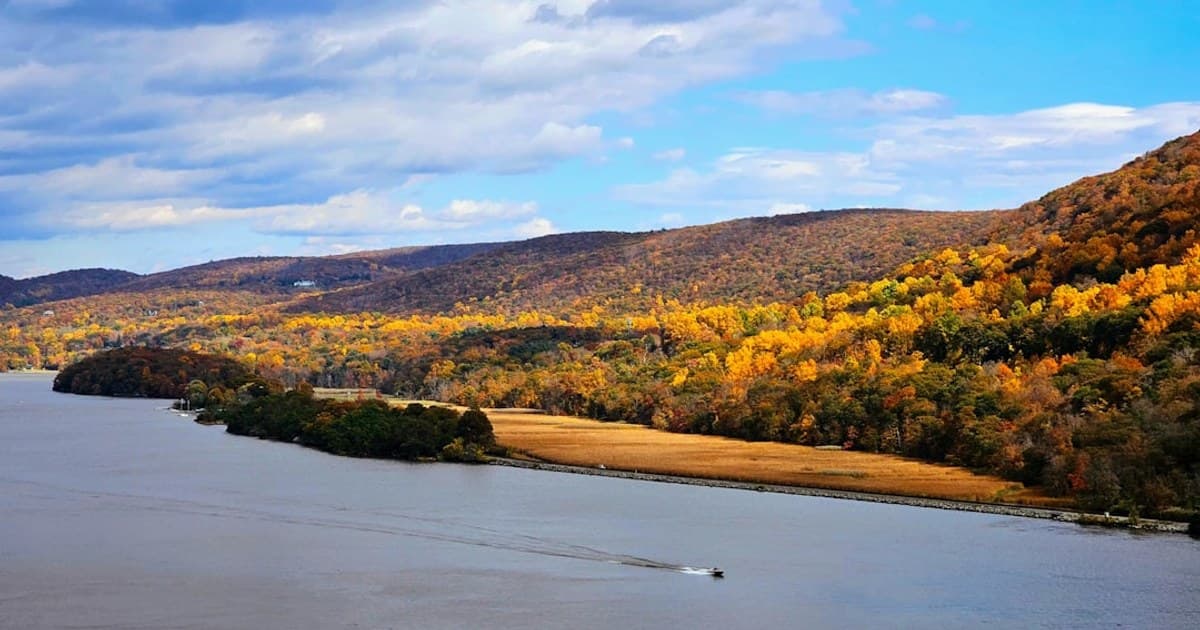


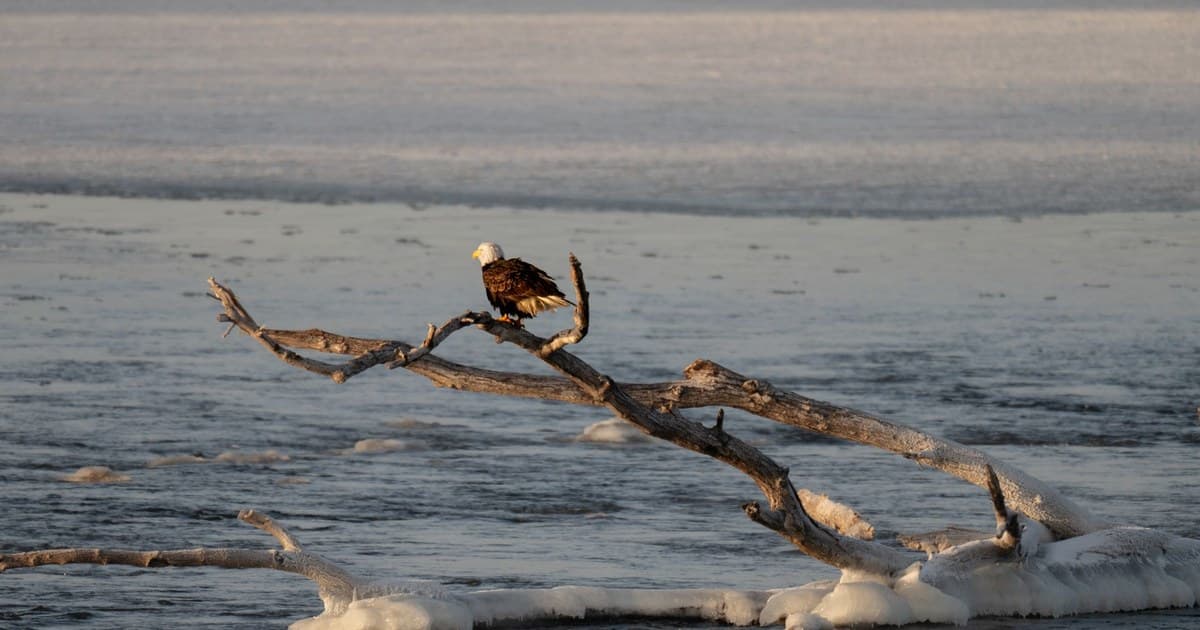
Bald eagle watching in Westchester is a January and February habit with a simple method: go to the river when it is coldest, bring binoculars, and stay put. Wintering bald eagles start arriving on the Hudson in December, peak in January and February, and mostly head back to their nesting grounds by mid-March, according to the state Department of Environmental Conservation. The stretch of river from Kingston down to Croton has become a favored wintering area, and the Westchester shoreline from Croton Point north to Peekskill has several of the state's recommended viewing spots.
Why the eagles come
Bald eagles hunt fish, and fishing depends on open water. Teatown, which has run the region's eagle festival for more than two decades, notes that the birds are more likely to gather in the lower Hudson Valley when temperatures stay consistently cold and waterways ice over. Mild weeks spread them out; a long cold snap concentrates them along the river. That is the setup to watch for.
Where to look: the DEC sites in Westchester
The DEC's list of Hudson River viewing areas includes four on the Westchester shore:
- George's Island Park, Montrose. DEC names the parking area itself as the viewing spot, which suits the agency's advice to stay in or beside the car.
- Verplanck waterfront. The riverfront in the hamlet of Verplanck, in the town of Cortlandt.
- Riverfront Park, Peekskill. The city's waterfront park.
- Charles Point and China Pier, Peekskill. A second Peekskill shoreline site on the DEC list.
Across the river, DEC also lists the Route 6/202 overlook above Iona Island and Constitution Island from North Dock at West Point, for anyone making a loop.
Croton Point Park
Croton Point Park, 1A Croton Point Avenue in Croton-on-Hudson, is a 508-acre Westchester County park on a peninsula on the east shore of the Hudson, and it is the base for the county's big eagle weekend. It is open 8 AM to dusk year-round. In winter the open fields and shoreline give long sightlines across the water, and the park's nature center sits on the grounds.
EagleFest
Teatown's Hudson River EagleFest is the annual celebration of the birds' return, run by the Teatown Lake Reservation nature preserve and held at Croton Point Park. The 2026 edition was the 22nd. It was set for Saturday, February 7, then postponed a week to February 14 because of forecast frigid temperatures and high winds, which says something about eagle-watching weather.
The 2026 program, as Teatown announced it, ran 9 AM to 4 PM and included:
- Live bird-of-prey shows and a raptor flight show
- Guided bird walks with spotting scopes trained on the eagles
- Heated tents with educational exhibits, and crafts and games for kids
- Free shuttle buses linking the festival headquarters, parking lots, the Croton-Harmon train station and the Croton boat ramp viewing site
- An EagleFest passport, stamped at viewing sites and exhibitors, for a raffle
Viewing sites outside the park in 2026 included George's Island Park, Steamboat Riverfront Park in Verplanck and the Groundwork Hudson Valley Science Barge in Yonkers. Teatown says the festival now draws more than 3,000 visitors.
The 2027 date had not been announced when this was published. Last year Teatown said tickets would be available by mid-December at teatown.org/eaglefest, and the festival has landed on an early-to-mid-February Saturday in recent years. Check there, and on the events calendar, before planning around it.
By train
EagleFest is set up for Metro-North: the shuttle meets trains at Croton-Harmon on the Hudson Line. On any winter day, DEC points out that riders on the river side of trains between Croton-on-Hudson and Albany have a strong vantage point for eagles on the ice and in the trees along the bank. A window seat on the left side heading north is the cheapest eagle tour in New York.
Eagle etiquette
DEC's rules for viewing are short:
- Keep your distance. Stay in or right beside the car, and do not approach closer than a quarter mile. Avoid roosting areas.
- Keep it quiet. No honking, slamming doors, loud radios or yelling.
- Leave pets at home.
- Use optics. Binoculars and spotting scopes, not footsteps, close the distance.
- Never flush a bird. An eagle forced to fly burns energy it needs to get through the cold.
- Respect property. Stay off private land and out of restricted areas.
Winter on the river is raw. Dress for standing still in wind, not for walking: layers, a hat, insulated boots and a thermos of something hot.
The cannabis rules
Every site in this piece is public: county parks, village and city waterfronts, boat ramps and the festival grounds. New York state law prohibits cannabis consumption on state-owned land and in public spaces, and that includes the parks, the parking areas where DEC asks viewers to wait, the shuttles and the trains.
Adults 21+ who want to stop at a licensed shop on the way north have options in Ossining and Peekskill, both on the Hudson Line. Verify licensed status via the OCM QR code at cannabis.ny.gov, bring a valid government-issued photo ID, and keep purchases sealed. With edibles, start low and go slow. Driving impaired is illegal in New York.
The Croton-on-Hudson hub gathers what is published about the village, and every licensed address in the county is on the dispensary map.
FAQ
When can you see bald eagles in Westchester?
Wintering eagles begin arriving in December, peak in January and February, and mostly leave by mid-March, according to the DEC. Cold snaps that freeze inland water bring the most birds to the Hudson.
Where can I see bald eagles in Westchester?
The DEC lists George's Island Park in Montrose, the Verplanck waterfront, Riverfront Park in Peekskill and Charles Point in Peekskill. Croton Point Park in Croton-on-Hudson hosts Teatown's EagleFest.
When is EagleFest 2027?
Teatown had not announced the 2027 date as of 2026. The 2026 festival ran on February 14 at Croton Point Park after a weather postponement. Check teatown.org/eaglefest.
Is Croton Point Park open in winter?
Yes. The county lists it as open seven days a week, 8 AM to dusk, year-round.
How close can I get to a bald eagle?
DEC asks viewers to stay at least a quarter mile away, ideally in or beside their car, and to use binoculars or a spotting scope instead of approaching.