

Ossining gave American English the phrase "up the river," from the old practice of sentencing people convicted in New York City to serve their time at Sing Sing, upriver on the Hudson. The prison opened in 1826, built by inmates under warden Elam Lynds from marble quarried on the site, and it still operates as a maximum-security facility. Most of the county knows the village for that, and for its Hudson Line stop.
The village deserves a longer look. Between the hills behind it and the river in front, Ossining packs in a trail preserve, a piece of 1840s engineering you can walk through and a waterfront with views most of Westchester never sees. All of it fits in one day on foot, starting from the train.
The Double Arch and the aqueduct underground
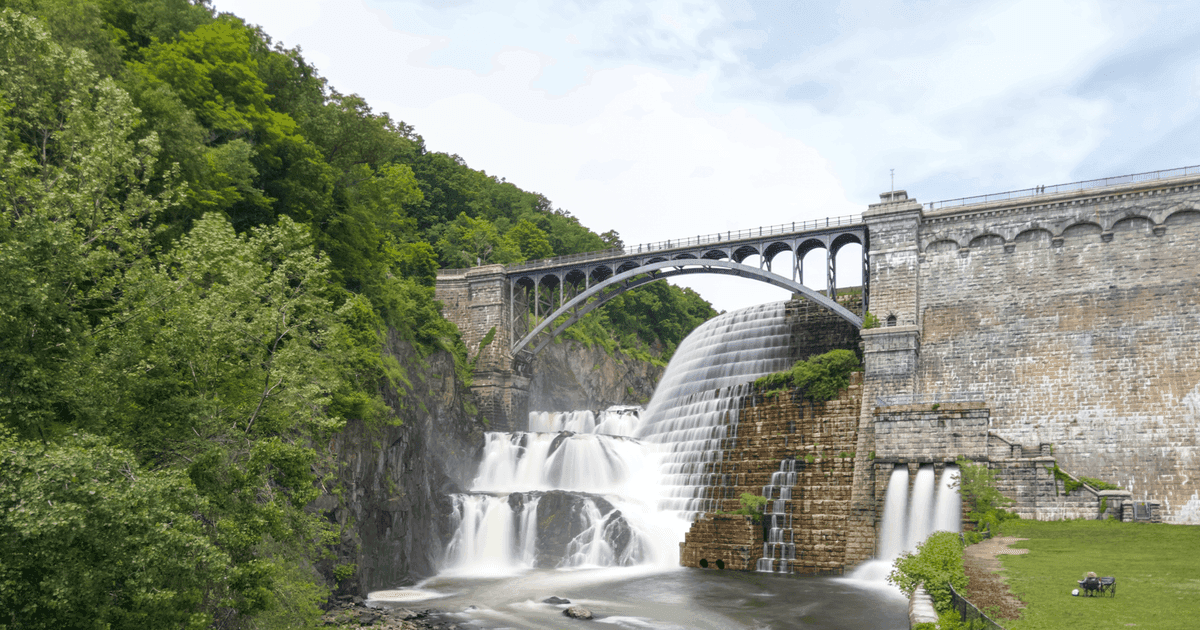
The Old Croton Aqueduct carried water from the Croton River to New York City starting in 1842, and in Ossining it crosses the Sing Sing Kill gorge on the Double Arch, a stone bridge with an 88-foot arch. The aqueduct trail runs across the top of it, and the promenade by Ann Street gives the best view of the structure and the gorge below.
The better experience is underneath. The Friends of the Old Croton Aqueduct run free, easy weir chamber tours of about two hours that descend into the Ossining weir and the original 1842 brick water tunnel. Tours meet in front of the Joseph G. Caputo Community Center at 95 Broadway, about a fifteen-minute uphill walk from the Ossining Metro-North station. Pre-registration is required, tours are scheduled on select dates and weather can move them, so check aqueduct.org before planning around one.
The aqueduct trail itself is part of the Old Croton Aqueduct State Historic Park, a long, mostly flat path that follows the buried conduit south through the Rivertowns. It is an easy walk from the Double Arch in either direction.
Teatown: the preserve in the hills
Teatown Lake Reservation at 1600 Spring Valley Road is the county's best case for a nature preserve run by a nonprofit rather than a park department. Nearly 15 miles of maintained trails, fourteen in all, cross fields, hardwood forest, laurel groves, wetlands and two lakes. Trails are open dawn to dusk every day of the year. Parking is $7 for non-members, and leashed dogs are welcome on the trails.
The Lakeside Loop around Teatown Lake is the place to start: flat, scenic and short enough for a mixed group. More ambitious walkers can push onto the connecting trails, which link Teatown to the Briarcliff Peekskill Trailway and the Croton Aqueduct. The Nature Center building has been under renovation, with a reception trailer standing in, so check teatown.org for current facilities before visiting.
Teatown sits a short drive from the village center, not a walk. Pair it with the riverfront on a day with a car, or with the aqueduct on a day without one.
The riverfront
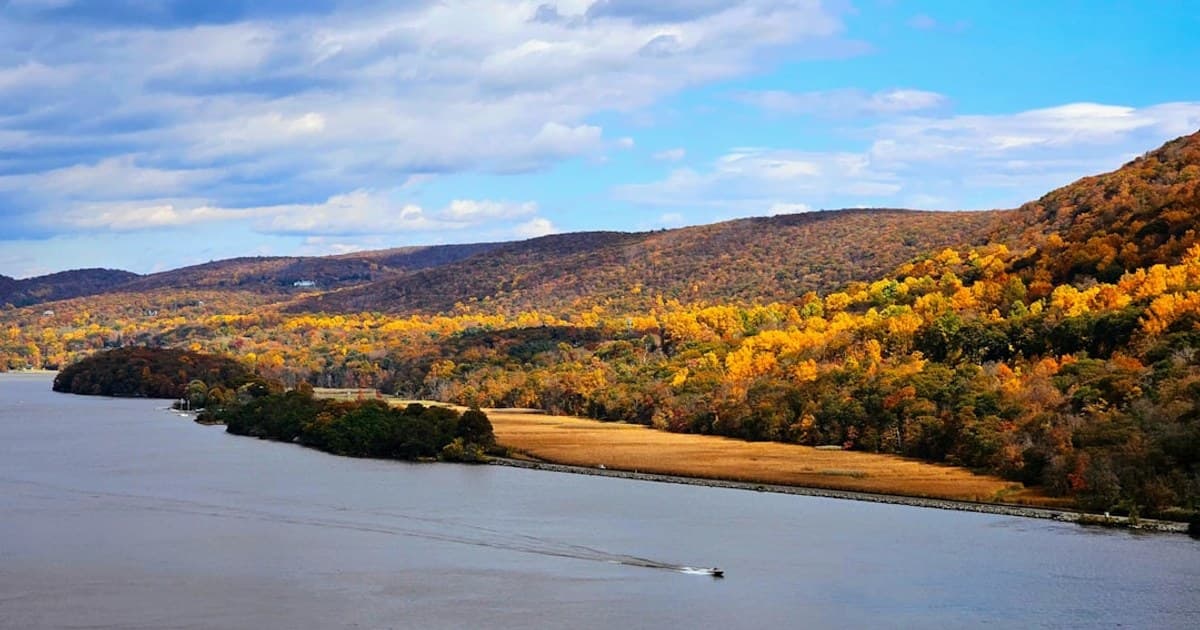
Two village parks put Ossining's waterfront to use. Louis Engel Waterfront Park, just south of the train station, has river views across to Croton Point, glimpses of Sing Sing to the south, fishing piers, a kayak launch and a small beach area. Henry Gourdine Park adds paved paths, sunset benches and eight interpretive panels telling the riverfront's story from the Sint Sinck people to the present. The village and the prison both took their name from the Sint Sinck; the village went by Sing Sing until 1901, when it renamed itself Ossining to put some distance between its businesses and the prison.
It is a quieter stretch of Hudson shoreline than the Rivertowns to the south, and the late-afternoon light across the river toward Rockland is the reason to time the visit for the end of the day.
The museum taking shape
The Sing Sing Prison Museum is building out a visitor center and exhibition gallery in the 1865 Olive Opera House at 30 State Street, timed to the prison's 200th anniversary. The museum has run public programs in person and online while the space takes shape. Check singsingprisonmuseum.org for what is open before you go.
An Ossining day
- Morning: Teatown's Lakeside Loop, before the lot fills.
- Midday: lunch in the village, then the Double Arch and a stretch of the aqueduct trail.
- Afternoon: a weir chamber tour, if one is scheduled.
- Late afternoon: the riverfront parks for the sunset, then the train.
Car-free visitors can skip Teatown and do the rest from the station: the riverfront is next to the platform, and the aqueduct is up the hill.
For adults 21+
The Ossining town hub and the dispensary map list licensed shops nearby, and the Hudson Line puts Croton-on-Hudson one stop north and Sleepy Hollow a few stops south. Verify licensed status via the OCM QR code at cannabis.ny.gov before you buy.
Every stop above is a park, a preserve or a public trail, and none is a place to consume. New York state law prohibits cannabis consumption on state-owned land and in public spaces, which covers the Old Croton Aqueduct State Historic Park, and the village waterfront parks are public spaces. Teatown is a private preserve with its own rules. Keep purchases sealed, in the trunk if you drove, and never consume in a car. Consumption belongs at a private residence or a rental whose host allows it. For what is on along the Hudson Line this season, see the events calendar.